


I spent the Fourth of July weekend at another somatic emotional processing retreat, but this particular container was centered around those of us who walk through the world in a gender identity that is different from the one we were assigned at birth.
Doing deep process work alongside other trans, nonbinary, and genderfluid folks offered a level of liberation that my body didn’t know it had been longing for.
I spent most of the long weekend with my shirt off—dancing, morning yoga, even wrestling—free to simply be and be seen in the body that I have cultivated.
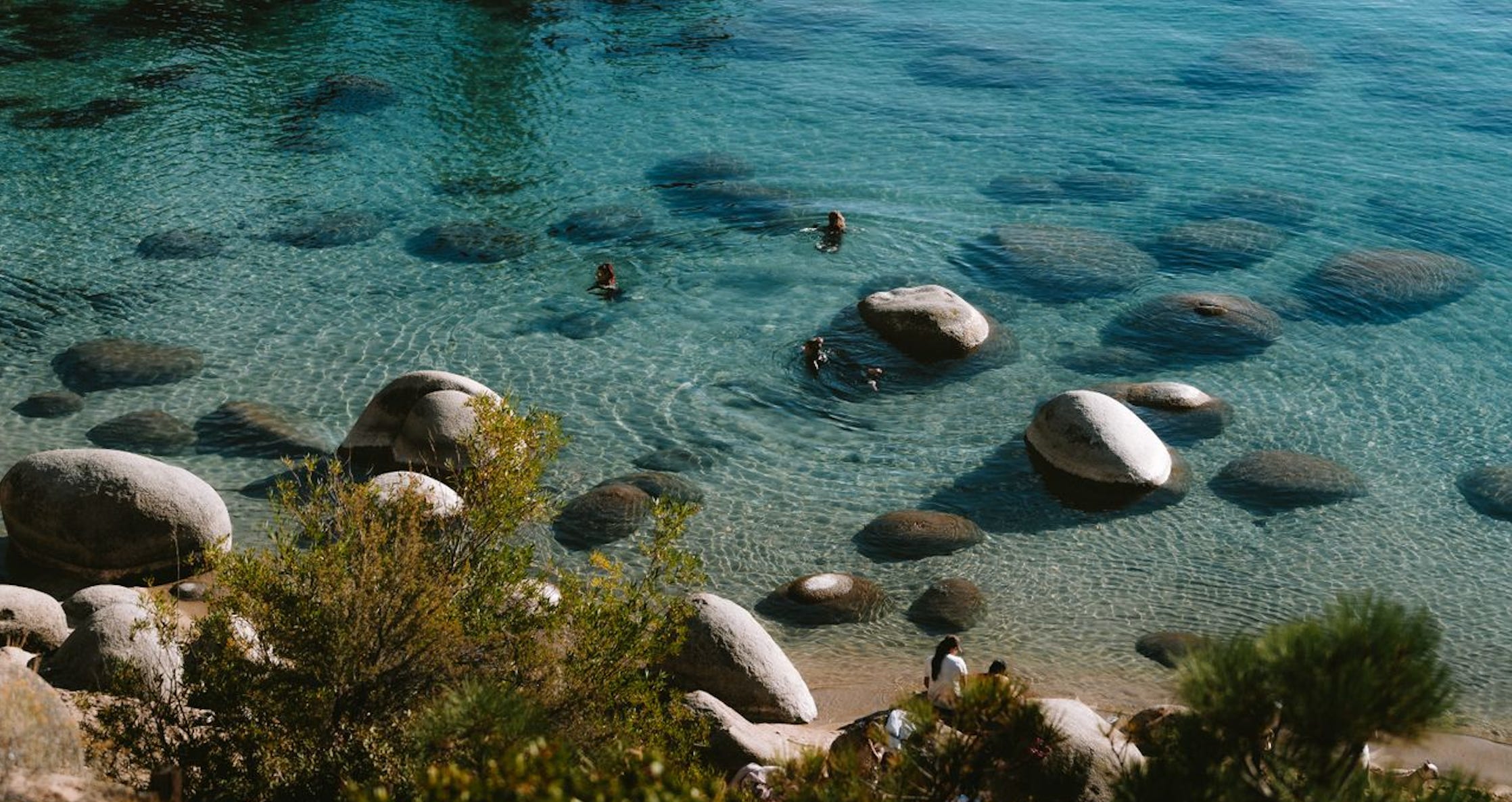
It was especially hot that weekend, so we made good use of the outdoor pool during the day and at night. Swimming nude with my kin felt both subtly magical and quietly revolutionary.
“In an era of global anxiety, isolation, and separation that often pulls us away from our physical selves, the act of returning to the body is not a luxury—it is an essential act of reclamation and resistance.”
—The Body Electric School
It wasn’t simply the freedom of being shirtless or nude. I’ve done that before. It was the absence of vigilance. My body wasn’t scanning for who might stare, misunderstand, or question whether I belonged. It wasn’t bracing for curiosity, discomfort, or projection. It could simply exist among people who required no explanation.
I don’t think I realized how much energy that vigilance had been consuming until it was no longer necessary.
At the time, I thought the retreat itself was what made that experience possible. It was a carefully held container, intentionally created to invite authenticity, embodiment, and healing. Of course my nervous system relaxed there.
I didn’t yet realize that what I was experiencing wasn’t just the safety of the container. It was the medicine of immersion.
When the Water Finds You Again
A week later, I found myself wading in a winding river with my anchor partner.
After walking down the ravine, finding a sweet spot, and hopping into the water together, we sat along the shoreline. I felt so grateful to be taking in the beauty of the scene: a dozen trans and queer bodies of all genders, shapes, and colors being in simple joy.
Some cooked elaborate meals on flat stones in a fire. Some swam and played and laughed in the water. A few got high and had some existential conversations. We were all there together, a temporary but important community of people who understood something about one another without a word.
What struck me was how comfortable we all seemed and yet how different we all looked. There were bodies marked by transition (like mine), bodies untouched by medical intervention, tattooed bodies, disabled bodies, young bodies, aging bodies. Masculine. Feminine. Neither. Both. Every variation seemed to make more room for every other variation.
No one appeared to be performing belonging. We simply belonged.
Then, in what felt like another magical moment, an enormous bald eagle soared over us all. It flew below the treetops, back and forth along the river as though sharing the moment with us rather than simply passing through. We all watched in quiet amazement. None of us spoke for a while. It felt like one of those rare moments where beauty arrives with such precision that words only diminish it.
As I sat there, something quietly clicked.
The freedom I had experienced at the retreat hadn’t stayed at the retreat.
Once again, I found myself immersed in a body of water, surrounded by people whose very presence allowed my own body to soften. The pool and the river were different, but the experience was strikingly familiar. My shoulders relaxed. My breathing slowed. Without consciously deciding to, my nervous system recognized that it no longer needed to be on guard.
It occurred to me that perhaps I wasn’t simply swimming in water; I was swimming in community.
Healing Is a Collective Experience
I often think of healing as something I do. My meditation practice. Journaling. Somatic therapy. Bodywork. These have all transformed my life, and I remain deeply grateful for them.
But these experiences reminded me that healing is also something we become immersed in.
Sometimes what allows the nervous system to soften isn’t another insight or breakthrough. Sometimes it’s finally being surrounded by enough people who require nothing from us except our presence. People with whom our bodies no longer have to negotiate for acceptance before they can rest.
We often frame healing as an individual journey, yet our nervous systems evolved in relationship. We learned safety—or danger—in connection with other people.
It makes sense that some forms of healing can only happen there as well.
Some wounds happen in community.
Some happen because community was absent.
And some healing simply cannot happen alone.
The Environments That Change Us
While these experiences unfolded within trans and queer community, I don’t think their wisdom belongs only to us.
I suspect every human being longs for places where their body no longer has to perform, explain, translate, defend, or diminish itself to remain connected. Places where difference isn’t merely tolerated but expected. Places where belonging isn’t earned but assumed.
Lately I’ve been wondering if this is one of the deepest purposes of community. Not simply shared interests or shared identities, but the creation of environments where our nervous systems can finally stop asking, Am I safe here?
There are places on Earth where your body must acclimate before it can thrive. Given enough time, what first felt unfamiliar begins to feel natural. The body adapts, not because it has become someone new, but because it has finally learned that this environment can sustain it.
Perhaps communities work in much the same way.
When we are immersed in relationships rooted in authenticity, curiosity, and care, something begins to recalibrate. We become less defended. More available. More fully ourselves.
The water hasn’t changed who we are; it has simply become an environment where our bodies no longer have to spend so much energy surviving.
I’ve begun to notice that my body often knows it has found those places before my mind does. When my shoulders soften. Breathing deepens. Time slows. I become more myself rather than less.
Maybe belonging isn’t just an emotion.
Maybe it’s a physiological experience.
And maybe healing isn’t only about learning to stand on our own.
Maybe it’s also about finding the waters where our bodies remember they were never meant to swim alone.
If you feel moved to support my work:
Like, comment or share — It helps me know how resonant my writing is with you.
Leave a one-time tip — Your small token of support is much appreciated:
Gift a subscription to someone who would love this — Thank you for being a generous human.


