


I’ve had a number of new realizations recently about how my upbringing has directly shaped what lights me up most in my work—especially in the realms of consent, boundaries, and platonic intimacy.
Even if you’re not into astrology, you’ve likely felt the power of this period—the New Moon Solar Eclipse in Virgo and the Fall Equinox—when old patterns surface and call for radical transformation. In other words, this is a time for past wounds to be harvested for resolution. We’re seeing it on the macro scale in the U.S. and globally, and we can use that zoomed-out view as a larger mirror for our own upheaval on a micro level. Though it never feels quite “micro,” does it?
As an “emotional detective,” I can easily make these correlations for others, yet it has taken a long time to name my own.
Consent and Core Wounding
As an adult, I’ve discovered that I don’t just appreciate consent—I thrive on it. I like being asked if I’m available for a conversation, whether someone can use or consume something in my home, or if I’d like help with a task—even if my default answer to the latter has historically been “no.”
Growing up, there were no locks on the doors, and knocking wasn’t a practice. I lived with a constant tension that my bedroom door could swing open at any moment—my mother entering in a tirade or my younger brother rummaging through the laundry basket that lived permanently on my floor.
Back then I couldn’t name the unease; I only felt the constant awareness that my space was never truly mine.
The correlation: my core wound is “not mattering.” When someone assumes instead of asking, that wound stirs. These days, I relish being considered; it heals my inner child and aligns with one of my deepest values: relationality. No wonder I’ve been drawn to cuddle therapy and to Shibari, where consent is foundational.
Boundaries: How I Survived
Without privacy, I had to invent my own borders just to know where I ended and the rest of the world began. From a young age, I learned to listen to the full-body “no” that rose up when something felt wrong.
I refused to wear the frilly clothes my mother preferred for me. I chose my own haircut, my own style—anything that let me say: This is who I am; I am not who you want me to be. By sixteen, I found my first therapist—my own lifeline. Soon after, I drew the sharpest line of all: I told my mother we would either go to therapy together or we would have no relationship.
Those choices weren’t acts of teenage or young-adult rebellion; they were survival. They were how I protected the small flame of selfhood I was determined to keep alive. And the ultimatum worked in my favor, though not the way you might think. It has been twenty-one years since we last spoke, but that boundary-setting continues to pay dividends.
The correlation: the boundaries I forged in desperation became the blueprint for the healthy ones I honor now. What once served as armor has evolved into clarity and respect—tools I use every day to help others hold their own lines with compassion.
Lack of Affection, Love of Intimacy
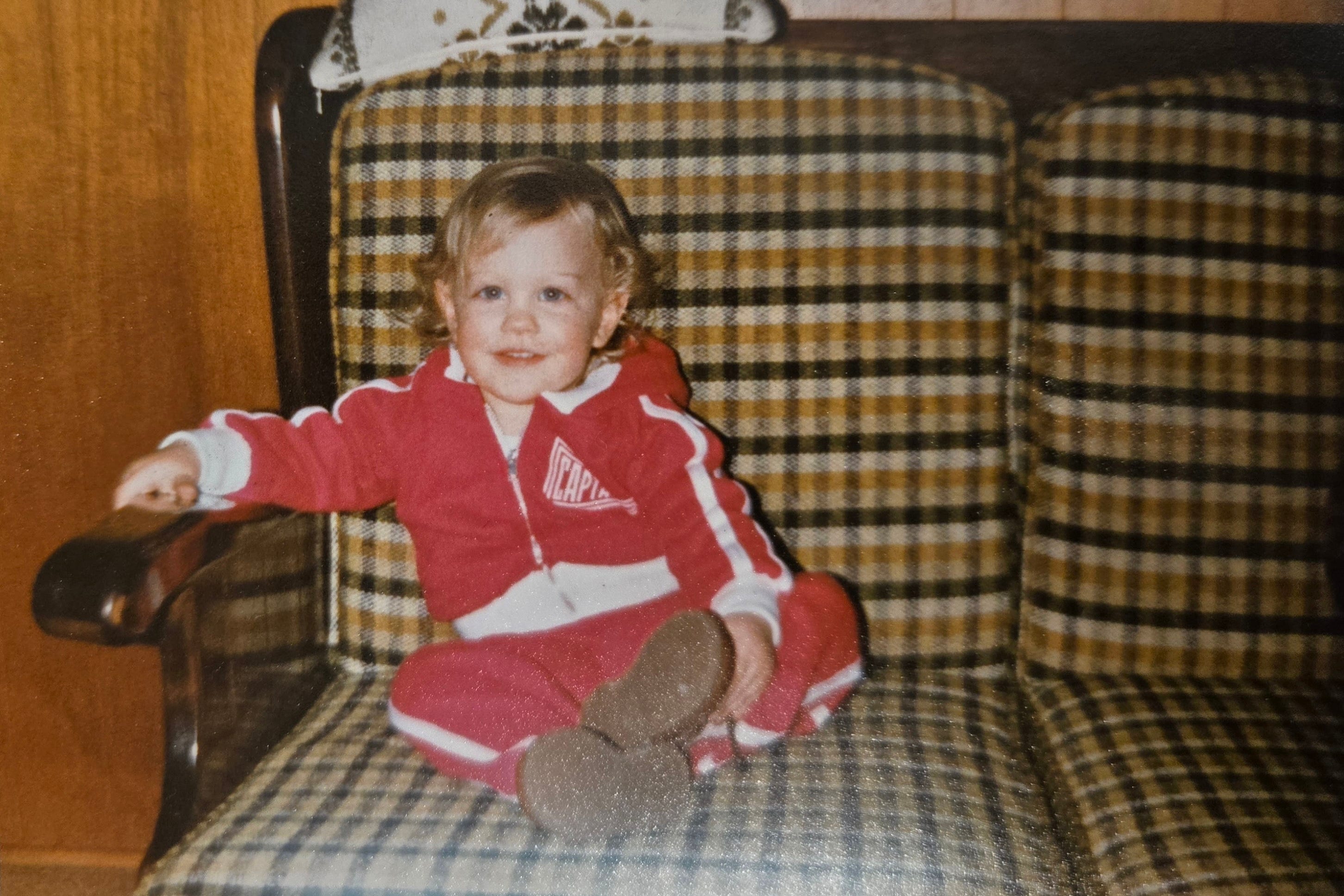
As the oldest sibling and first grandchild on my mother’s side, my grandparents were fixtures in our lives. Judging from the number of photos of my brother and me in that split-level, I can tell we spent a lot of time there, even if I don’t have a ton of memories to prove it. What I do recall is that until I was about six, I would lie tummy-down on their green-and-brown checkered couch while my grandma traced circles along my back, arms, and legs. It bordered on tickling, and I remember the little smile on my face as I hoped she’d never stop.
That gentle ritual ended abruptly when my grandfather died. We saw my grandmother less and less as her mental health declined, and my mother’s charged relationship with her turned my brother and me into pawns. Limiting contact became my mother’s form of checkmate.
My paternal grandmother—whom I adored—was touch-averse. With her, affection meant “air kisses,” a quick “mwah” into the space between us. I never realized how unusual that was, or how it shaped me, until much later.
Meanwhile, the majority of consistent touch at home came through violence at the hands of my mother. I longed for safe closeness long before I had words for it.
The correlation: deprivation sharpened my hunger for connection, but my dissociative way of coping with abuse left me unable to feel my body. Offering safe, consensual touch now is how I reclaim what was stolen and remind others—and myself—that intimacy can be gentle, chosen, and abundant.
Looking back, I can see how each wound carved the contours of my path—consent grew out of intrusion, boundaries out of survival, intimacy out of deprivation. What once felt like deficits has become the very source of my devotion. And maybe that’s the invitation for all of us: to notice where our own histories have quietly shaped the way we long, the way we protect, the way we connect.
In a world wrestling with breaches of trust and the hunger for true belonging, our individual healing is never separate from the whole—it is how the collective repair begins.


